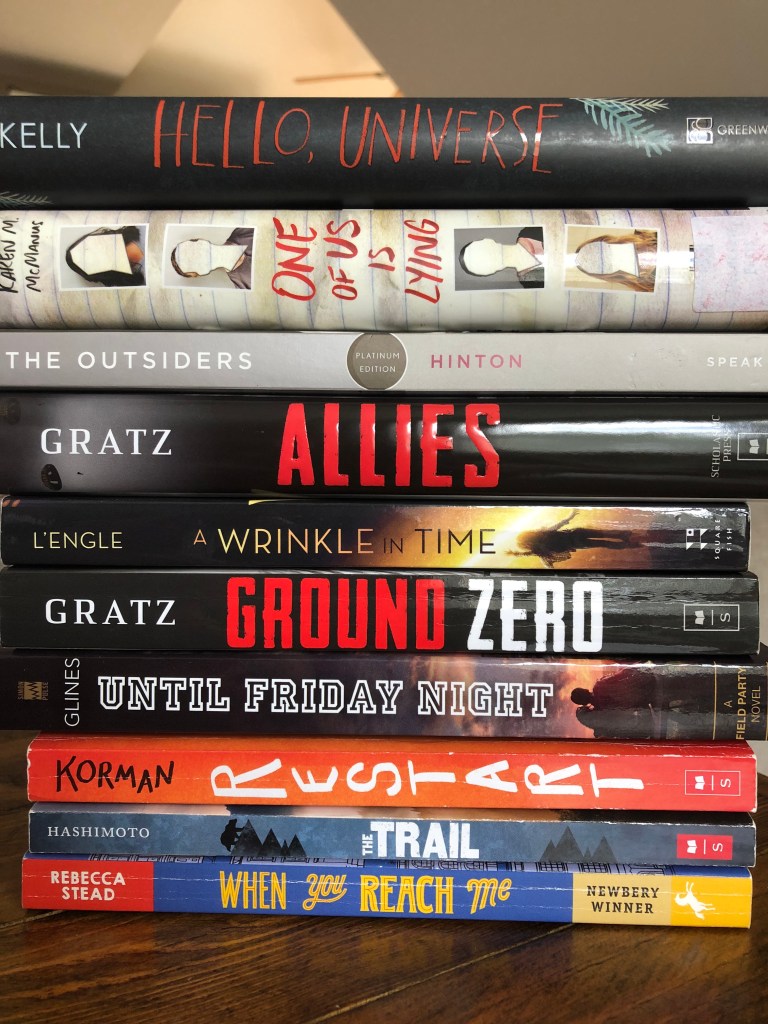
Response to Ripp – LLED 6410

This week’s reading has been the most agreeable for me. I absolutely love the idea of inspiring students to love reading. The thought of helping a reluctant reader find a book or series that they fall in love with, and that opens the flood gates for them to start reading frequently. Or even the idea of helping a reluctant reader start reading without it feeling like a chore, that’s progress. I was onboard with what Ripp was saying within each of the chapters we were to read.

I especially appreciated how she pointed out that it often seems like we treat reading as a checklist to get through, rather than taking it deeper and letting the students develop their reading. I also was inspired by the realization that we as ELA teachers should be like a librarian in our own classrooms. This will help us suggest the right books for the right students and help students branch out, find their own interests, and fall in love with reading. In other words, we have to know our students and be well read enough to make the proper suggestions that will help them. I sensed a commonality here between Ripp and Kittle, as they both think relationships with students are important.

I also loved the idea of creating a culture of literacy in your classroom. In order for students to be inspired to become readers they need someone there modeling how to do that. You can be that someone. From things as simple as talking about the books you are reading, taking the time to read while your students read so they can see you doing that, things as simple as that can make a huge impact. She mentioned having a “What I’m reading” “What I’ve Read” “What I’m Reading Next” signs outside of your classroom. I didn’t particularly like the public display of how many books you’ve read. I could see that being viewed as a bit braggy.

In chapter 5, I loved the contrast of how reading was taught versus how it should be taught or is taught now (at least from Kipp). The idea of telling a student what to read in the past versus allowing them to choose now, or having students log the books they read on some sort of formal worksheet versus letting them tell you about the book. I just love the shift in how it should be approached and feel it is a great way to help students develop as readers. I also think it is the best way to help them discover what kind of reader they are, what types of books they like, and maybe that they actually LOVE to read.

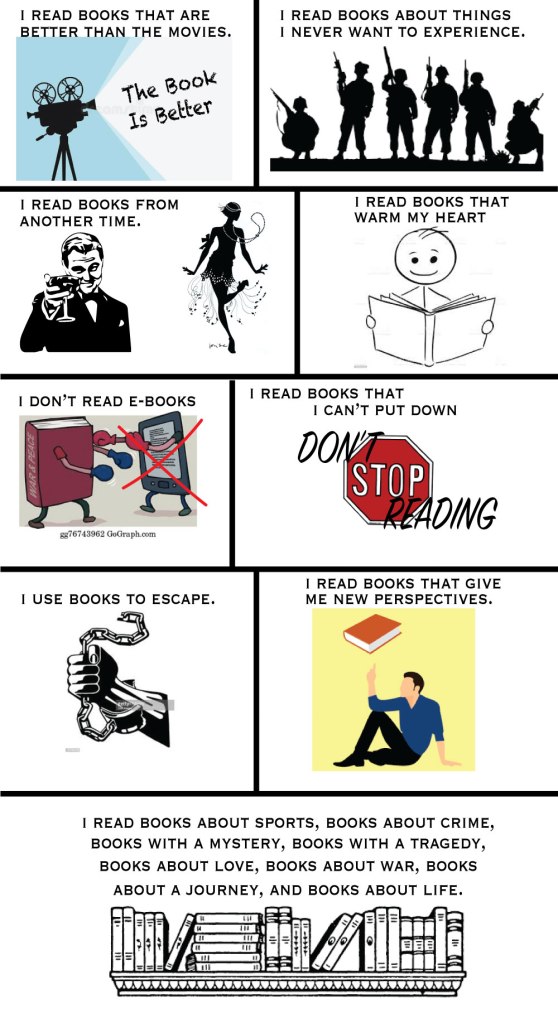
8 Reasons Why YA Lit is Legit

If you’re a fan of YA you’ve heard it from your friends, coworkers, sworn enemies, or barista at your local coffee shop where you sit and read for hours…”How can you read those YA novels? Isn’t it all vampires and love?” For too long you’ve been going through the struggle that is defending your reading preferences. I have taken it upon myself to make that argument for you. So feel free to tweet a link to this write up the next time someone hits you with one of those, “Oh, I thought you’d outgrow that YA stuff eventually.” Here are 8 reasons why YA lit is worth reading.

1. Old People Are Gross

That just sounds like a fact, I know, but it has meaning behind it. Who wants to read a novel about a middle aged man who works is a regional manager at a paper company. While that makes for a great tv show (nod to Michael Scott) it is not what you want to read about. YA novels tell stories of young adults/teens, discovering themselves, dealing with trauma, living life, falling in love, and so on. That is exciting, it is written about characters who are at a point in their lives that they haven’t determined what’s next just yet. There is still room to make mistakes and grow and be free, before the mundane days of adulthood come and take over.

2. Everyone is Awkward

YA novels have a truth to them, in the fact that rarely do characters have it all together. No one and I mean no one made it through their teen years without the awkward stage and YA depicts that. It isn’t perfect smiles and fast times. Your early teens is when you navigate through puberty and acne becomes part of your every day norms. YA doesn’t shy away from representing teens as they are. EVERYONE is awkward at that age, so its comfortable when novels star characters that are going through the awkward years.

3. The Real World Kinda Sucks (Sometimes)

Why immerse yourself in the reality that is the real world, when you can get lost in a YA novel? It is easy to escape what is going on in the world by indulging in a new YA novel. The funny thing about that is that most of the created worlds within the novels have some features that kinda suck at times as well. But there is a familiarity there and I think that’s why it’s so enjoyable. Also, it’s way easier to watch someone else’s world falling apart than to be experiencing it yourself. I mean how else would reality television be a thing?

4. Back to the Future (really just back to the past)

This is where YA as a genre gets exciting for adults. When you start reading about these characters, you begin to see yourself in them, you can see your friends from high school, you can imagine the halls, having lunch in the cafeteria, skipping class, homecoming, and all of the other things that happened when you were a teen. YA gives the older readers a chance to relive some of the old days and possibly have a better understanding on what the characters are dealing with in the novel because of it. In this way, adults can identify with characters in YA novels.

5. YA Novels Make Great Movies (i.e. The Hunger Games)

YA books, particularly those that are part of a series often times make great movies or more recently tv shows (or streaming series). The argument on whether the book or film is better, that is for another day. But reading a novel and falling in love with it is quite an experience. When you later hear that the same book is being adapted for the big screen, it is exciting and scary all at once. While not all of the movies do the books justice, YA as a whole lends itself to having novels attempted to be adapted well on the big screen.

6. It Gives You All the Feels

How many times have you started smiling while reading silently because something made your heart warm? How many times have you thought back to your first high school heartbreak while reading a novel? Or how about when a character in the novel shares a first kiss? All of these things happen in YA novels all the time, which gives some of us older readers a bit of nostalgia. We enjoy being taken back into those moments with the characters on the pages. It helps us feel a connection with the novel and its characters. We like to have feelings! And that is normal!

7. You Are Not Alone…and You Need To Hear It

YA novels have a great way of allowing readers the opportunities to connect with a lot of different characters. No matter what struggle you’re going through, there is a YA novel that has a character you can relate to. It is comfortable and it means something to you, when you can see yourself in a character. I’ll go as far as to say that in some instances people who feel completely alone and isolated can cope with their feelings in a healthier way due to the connections made to characters in YA novels. YA is written for EVERYONE, no matter your age, you CAN connect to the characters.

8. Young Adults Are Our Future (TEENS)

Teens are not just teens anymore. It is not all about parties and fast cars and social media overload. While much of that goes on, we live in a time period where our teens today are activists, entrepreneurs, industry shapers. Teens have agency and they deserve to be represented that way in novels. Lucky for them, we have YA. I love how YA depicts youth, both older and later novels. The youth who are in the novels possess an agency, an heir of confidence even, in some cases at least. The bottom line is this, teens are out future and for the first time in awhile, they know it. YA authors are onto something when they are writing YA novels because they in a lot of ways shape the future. Teens are the future, teens read YA, YA represents characters with agency, and this influences those teens. So, in a roundabout way YA novels are shaping the future as we know because they are shaping teens.


Response to Kittle – LLED 6410

I agree with many of the things Penny Kittle mentioned in the portions of the book we read. My main focus in my teaching is relationship building, knowing my students so that I can better understand them, thus allowing me to support them in a more beneficial way than if I did not build relationships with them. In chapter 4 of Book Love Kittle made a comment that I clung to, “The most important condition in my classroom is my relationship with my students.” She goes on in that same paragraph to say, “The magic formula is the relationship we form and my ability to meet them where they are, accept where they are, and then put books in their hands that will ignite their own intrinsic motivation to read.” This is my philosophy for teaching ELA. Build strong relationships with my students, find out where they are, meet them there with a book in hand, and help them move forward.

Kittle also challenges the book choices that many teachers make when considering assigning class novels. She discusses how teachers know books that are being assigned are not be reading by the majority and that it is pressure from the curriculum that forces them to keep doing it. She challenges this thought by saying, “We can reach breathtaking, mind-altering views of literature through many doors.” In other words, we don’t have to keep teaching the same old novels that students: A) Don’t understand B) Can’t relate to C) Are not interested in. There is a plethora of literature out there (have you heard of YA?) that students can understand, they can relate to, and are far more likely to be interested in. These types of novels can still be as eye opening, challenging, thought provoking as ‘the classics.’

The last thing I want to point out about Kittle’s thoughts is the way she advocates for her students. She mentions how teachers throw around the terms lazy and rebellious when discussing students that aren’t doing the reading. Kittle is strongly opposed to these adjectives due to her experience. She explains that in most cases the students just can’t comprehend what they are reading so they give up, not out of laziness or rebellion but out of defeat. If we as teachers stay away from that mindset of, “They just don’t want to do the reading, they’re lazy.” And move into the mindset that asks, “Why didn’t they do the reading? What’s the real issue?” If we do that, then we have a better chance of meeting our students where they are and helping them move forward.

Response to Buehler – LLED 6410

The first thing raised by Buehler that challenges my thinking is something that I feel most ELA teachers struggle with or are at least aware of. The fact that our education system is highly driven by standardized tests. This leaves ELA teachers in a bit of a tough spot, as it is argued that YA novels are not appropriate for classroom lessons. I disagree with this fact and feel the purpose of having students read YA literature is not to make them great test takers. The purpose is to challenge their thinking, help them grow as readers and learners, approach topics that are tough to talk about at times, and overall give them an opportunity to discover reading that is beneficial for them.

Buehler mentions how class readings are harmful to many students because they are not involved in the selection of the novel. Those readers lack a wide variety of novels that they have been able to explore outside of school, therefore their introduction to novels is often forced upon them without any consideration of their likes, personality, hobbies, etc. This can often time put a bad taste in the mouths of students. This is one of the reasons why I am not fully sold on a classroom novels. I don’t want to force a particular novel on my students, I like to give them options instead. If I am able, my plan would be to have class novels read as groups rather than a class, to provide some agency for students in selecting which of the novels they’d like to read.

As far as Buehler’s 3 elements that are necessary for a proper framework for YA Pedagogy, I agree with them all. I struggle the most with #2, because I am not an expert in the field of YA yet. I don’t know which novels are best suited for which students because I have not read all of the novels I wish I had. While I agree with this a necessity, it is a challenge for me. I stand firmly on the belief that knowing your students is the most important aspect of teaching. You HAVE to know your students in order to teach effectively. Knowing which novels to pair students with is part of knowing your students, it is the other part of the equation that challenges me. I have to broaden my own reading variety in order to make the proper suggestions. Otherwise, I will only be suggesting books that I personally enjoy, not books that I think my students will connect to or enjoy.

To be honest, I still struggle with the distinction between middle grades and YA literature. I think it depends on who you ask, as Buehler mentioned. Parents, librarians, teachers, students, readers of YA, authors of YA, companies that sell YA, will all give you different answers on what is and isn’t YA. So I think it is mostly up to the reader to determine. If it is a story that a young adult reader can erlate to, understand, connect with, then it is YA.

What’s this all about? (Literacy & Young Adult Literature) LLED 6410

What is literacy? The simple answer, the ability to read and write. But if you actively think about what literacy is, it is so much more than that. I was fortunate enough to have some great professors while finishing my undergraduate degree at UGA. They helped open my eyes a bit to the multi-faceted meaning of literacy. It IS about reading and writing, but it is more than that, it’s about creating, understanding, communicating, interpreting. Literacy stretches beyond reading and writing.

Adolescent literature is tough to define. Again, in a simple definition it is literature that is meant to be read by adolescent readers. YA novels are the perfect example of adolescent literature, but that genre is quite broad. We have books like Twilight, Harry Potter, the Hunger Games, all of which are adolescent literature, but so are books like the Hatchet and The Outsiders. This is a broad range of novels that fall under the YA or adolescent literature umbrella. If you would have asked me a decade ago, what are some examples of adolescent literature, I would have named things like the novels above. All of these novels have value, teach lessons, and entertain. But I wouldn’t have considered novels that deal with tougher topics or deeper meanings. I wouldn’t have included novels like The Fault in Our Stars or Dear Martin or even Legendborn. I would have argued that they deal with heavier topics, deeper issues, that adolescents can’t handle reading about.

Let me let you in on a little secret, I would have been wrong. Adolescent literature is every book that adolescents have access to, yes there are novels that target the adolescent reader. For the most part, those novels ALL deal with deeper issues and heavy topics. All of which, adolescents can relate to. The way Legendborn points out issues of race within the South, adolescents pick up on that, they understand that, they can relate to it because they see it. The idea of searching for the truth, the idea of finding yourself (I’m referring to Legendborn again) every teenager can relate to that. There is so much going on with their minds and bodies and hormones and emotions, they most certainly want to find themselves just like Bree.

Maybe I don’t have the perfect definition for literacy or adolescent literature, but I think that is sort of the point. Let each author and reader decide for themselves what it means to them.

Design a site like this with WordPress.com
Get started